You can count on us!
The smart hotel is an innovative concept in the hospitality industry, which uses advanced technologies and automation to provide guests with a personalized, comfortable, and efficient customer experience.
What is a smart hotel – hotel automation, wellness, and sports zones?
A smart hotel is a modern and innovative solution in the hospitality industry, which uses automation and contemporary technologies to increase guest comfort and satisfaction. Through integrated management systems, guests can personalize their experience — from automated lighting and air conditioning to digital check-in and mobile access to rooms. The smart hotel also includes advanced wellness and sports zones, offering smart fitness equipment and health apps, personalized training and relaxation programs. These technologies not only improve guest comfort and convenience, but also optimize the hotel’s operational efficiency, leading to higher profitability and sustainable development.
The main features of a smart hotel include:
- Hotel Automation
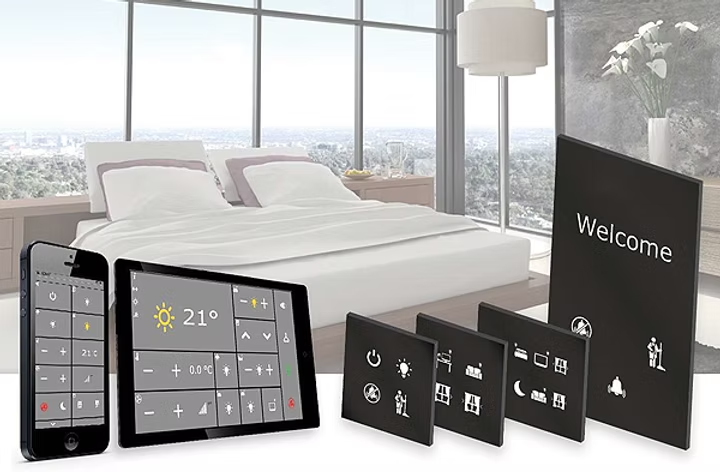
- Automated room management systems: Guests can control the lighting, temperature, curtains, and other room aspects via mobile apps or voice commands.
- Digital smart reservation, check-in, and check-out system: Enables quick and easy check-in and check-out without waiting at reception.
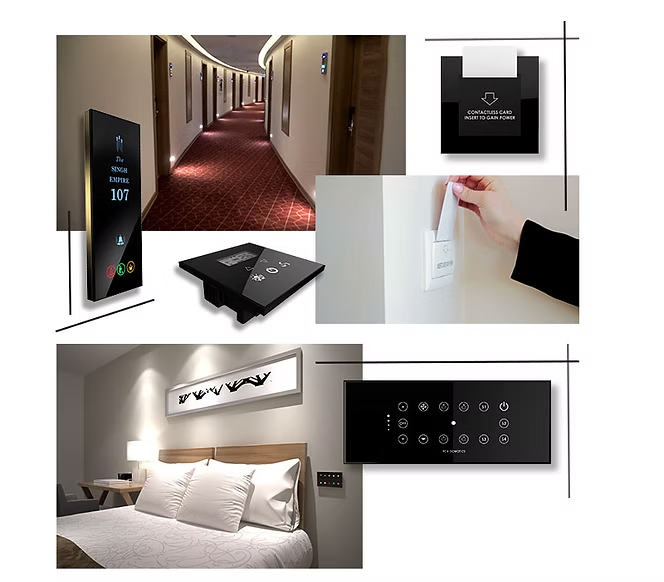
- Mobile room access: Room keys can be replaced with mobile apps, enhancing security and convenience.
- Smart service systems: Automated management of cleaning, food delivery, and other services through a smart platform.
- Real-time feedback: Systems allow guests to provide feedback and report problems, which can be quickly resolved by staff.
Building Management System (BMS)
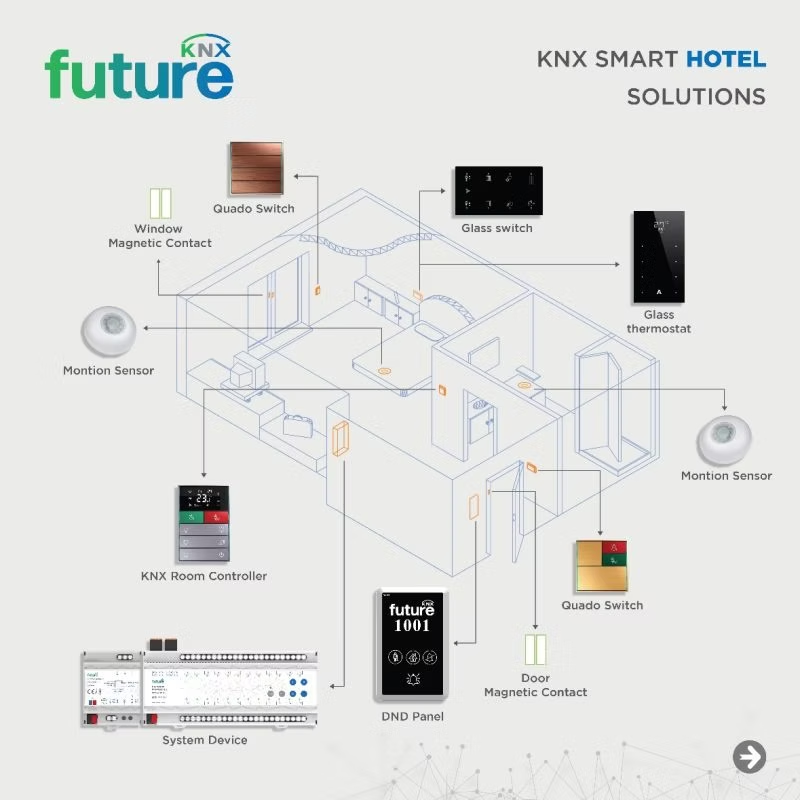
- Centralized management: The building management system allows centralized monitoring and control of all hotel aspects, including lighting, climate control, security, and energy efficiency.
- Energy consumption automation: BMS systems can optimize energy consumption by automatically adjusting lighting and climate based on room and common area occupancy.
- Intelligent sensors: Motion and presence sensors help automate lighting and climate control, reducing costs and increasing comfort.
Mobile Access and Digital Key System
- Mobile keys: Guests can use their smartphones as keys to access rooms and other hotel zones, eliminating the need for physical keys or cards.
- Security: Mobile access increases security by providing control over who can access certain areas and allowing for easy deactivation of lost keys.
Guest Room Management Systems (GRMS)
- Personalized settings: Guests can control lighting, temperature, curtains, and audiovisual systems in the room via mobile apps or voice assistants.
- Automated scenes: Ability to pre-set lighting and temperature scenes (e.g., “Good morning” or “Good night”) that automatically adjust the room atmosphere.
Intelligent Security Systems
- Video surveillance and facial recognition: Smart cameras and facial recognition software enhance safety for guests and staff.
- Access control: Access control systems can be integrated with mobile keys and other technologies to improve security.
Internet of Things (IoT)
- Connected devices: Devices and appliances connected via IoT provide real-time data to optimize resource management and improve services.
- Data analysis: The collected data can be analyzed to identify trends and optimize operational processes.
1. Wellness Zones
- Personalized wellness programs: Guests can choose and personalize their wellness programs, including spa treatments, meditation, and relaxation sessions through mobile apps.
- Smart relaxation technologies: Devices for aromatherapy, chromotherapy, and sound therapy can be installed in rooms and wellness zones to create a calm and relaxing atmosphere.
- Health monitoring: Smart devices for measuring health indicators such as pulse, blood pressure, and stress levels that provide real-time data.
2. Sports Zones
- Smart fitness equipment: Fitness machines can connect to mobile apps that offer personalized workout programs and track guests’ progress.
- Virtual trainers: Virtual trainers and interactive mirrors that provide guidance and motivation during workouts.
- Group activities and classes: Options to book and participate in group workouts and sports activities via digital platforms.
Benefits of a Smart Hotel
- Increased comfort for guests: Personalized services and automated systems ensure a high level of comfort and convenience.
- Improved service: Fast and efficient processes enhance overall service quality.
- Efficient resource management: Automation and smart systems help optimize costs and energy consumption.
- Higher guest satisfaction and loyalty: Personalized and innovative experiences lead to greater satisfaction and loyalty.
- Competitive advantage: Hotels that implement smart technologies stand out in the market and attract more clients.
In conclusion
The smart hotel is the future of hospitality, where modern technologies and automation create exceptional conditions for stay, improving both guest satisfaction and the hotel’s operational efficiency. These hotels offer unique wellness and sports zones that further enrich the guest experience and help them feel healthier and more satisfied.