
You can count on us!
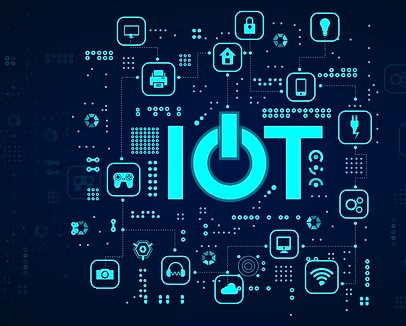
The Internet of Things (IoT) is a concept or paradigm that describes a network of physical objects (“things”) equipped with sensors, software, and other technologies for collecting and exchanging data with other devices and systems via the Internet. IoT is revolutionizing the way we interact with the world around us by offering new opportunities for automation, efficiency, and convenience in various areas of life and industry. The technology continues to evolve, expanding its scope and becoming increasingly accessible and integrated into our daily lives.
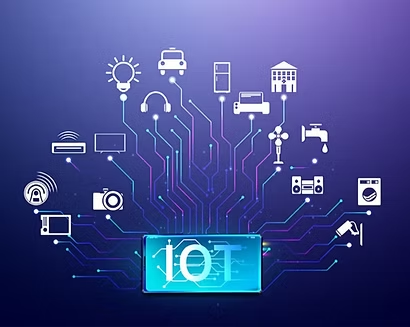
Characteristics of IoT:
Connectivity: IoT devices are connected to the Internet, which allows them to communicate with each other and with central control systems.
Sensors and Actuators: IoT devices include sensors for data collection and actuators to perform actions.
Data and Analytics: IoT devices generate large volumes of data that can be analyzed for decision-making and process improvement.
Automation: IoT enables automation of processes and control of devices without human intervention.
Interoperability: Devices must be able to work together and exchange data regardless of manufacturer or device type.
IoT is not:
A protocol: IoT is not a specific protocol, although it uses various communication protocols such as MQTT, HTTP, CoAP, and others for data exchange.
A solution: IoT is not a specific solution, but rather a set of technologies and approaches used to create solutions.
A device: IoT is not a single device, but includes a variety of devices that work together.
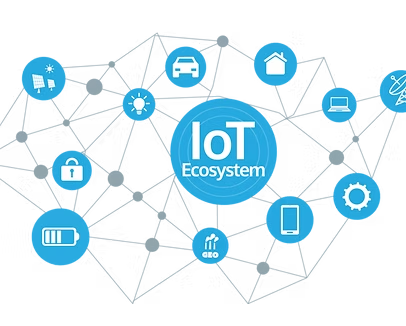
Examples of IoT Applications:
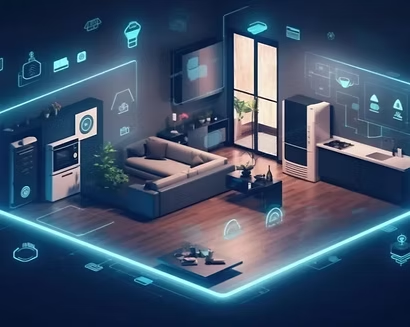
- Smart homes: Devices like intelligent thermostats, lighting, and security systems.
- Industrial automation: Sensors and machines connected to a network for optimizing production processes.
- Healthcare: Wearable health monitoring devices, such as fitness trackers and medical wearables.
- Smart cities: Management of urban infrastructure, such as street lighting, traffic control, and air quality monitoring.
- Agriculture: Soil monitoring, weather conditions, irrigation management, and livestock tracking. Integrating soil sensors, crop monitoring, and GPS collars for animals.
In conclusion
The Internet of Things (IoT) refers to the concept of connecting ordinary physical objects to the internet and their interaction with the surrounding environment through data exchange. These “smart” objects can include all kinds of devices equipped with sensors, software, and other technologies to collect and exchange data with other devices and systems over the internet.
IoT is a concept that combines various technologies, protocols, and devices to create a connected network of physical objects that can communicate and interact with each other to improve efficiency, convenience, and automation across different areas of life and industry.
KNX is an internationally recognized standard for building automation and control, which enables the connection and integration of various devices and systems in smart homes and buildings.
With the development of the Internet of Things (IoT), more and more opportunities are emerging for integrating the KNX standard with IoT concepts.
The integration of KNX and IoT offers numerous advantages, including enhanced flexibility, extended functionalities, and improved efficiency of building systems. With the help of gateways, cloud platforms, applications, and standards, KNX systems can be easily integrated with IoT solutions, providing better control and management of smart homes and buildings.
Leading manufacturers offering IoT solutions integrated with KNX include several well-known companies that stand out for innovation and quality in the field of home and building automation.
01. Schneider Electric, France
Welcome to our website! At AppVista Solutions, we specialize in developing mobile apps that make the reservation process effortless and user-friendly. Our booking system is perfect for scheduling appointments, reserving services, or booking stays and events. With our innovative solutions, you can easily manage your reservations and provide a seamless experience for your customers.
Schneider Electric is a multinational company of French origin. It was founded in France and has its headquarters in Rueil-Malmaison, near Paris. The company is a global leader in energy management and automation, with a presence in over 100 countries. It offers a wide range of products and solutions in the fields of electrical infrastructure, automation, and smart grids.
- Solutions: Schneider Electric offers a rich selection of IoT products and solutions integrated with KNX, through its EcoStruxure platform. These include smart metering devices, energy management systems, lighting, security, and HVAC (heating, ventilation, and air conditioning).
- Integration: EcoStruxure uses IoT to connect various devices and systems, while also supporting the KNX standard for interoperability.
02. Siemens, Germany
Siemens AG is a multinational company of German origin. It was founded in Berlin in 1847 and is headquartered in Munich, Germany. Siemens is one of the largest industrial manufacturers in the world, with operations across various sectors such as energy, healthcare, industrial automation, transportation, and infrastructure. The company is known for its innovations and technological solutions in the fields of automation and digitalization.
- Solutions: Siemens offers IoT solutions through its Desigo and Synco platforms, which integrate various aspects of building automation, including energy management, lighting, and security.
- Integration: Siemens platforms support KNX and provide a high level of connectivity and control through IoT technologies.
03. ABB, Switzerland-Sweden

ABB Ltd. is a multinational company of Swiss-Swedish origin. It was founded in 1988 through the merger of the Swedish company ASEA (founded in 1883) and the Swiss company BBC Brown Boveri (founded in 1891). ABB is headquartered in Zurich, Switzerland.
- Solutions: Siemens offers IoT solutions through its Desigo and Synco platforms, which integrate various aspects of building automation, including energy management, lighting, and security.
- Integration: Siemens platforms support KNX and provide a high level of connectivity and control through IoT technologies.
04. Hager, Germany-Sweden
The company Hager is of French-German origin. It was founded in 1955 by the brothers Hermann and Oswald Hager in the German town of Ensheim. Later, the company expanded its presence into France, where one of its main production centers is now located. Hager specializes in solutions for power distribution, building management, and smart home automation, providing innovative and high-quality products and services to the global market.
- Solutions: Hager offers solutions for smart homes and buildings, including systems for lighting, energy, and security management, which are compatible with KNX and use IoT technologies.
- Integration: The domovea platform by Hager uses IoT for connecting and managing smart devices, while also supporting the KNX standard for interoperability.
04. Hager, Germany-Fsdrance
The company Hager is of French-German origin. It was founded in 1955 by the brothers Hermann and Oswald Hager in the German town of Ensheim. Later, the company expanded its presence into France, where one of its main production centers is now located. Hager specializes in solutions for power distribution, building management, and smart home automation, providing innovative and high-quality products and services to the global market.
- Solutions: Hager offers solutions for smart homes and buildings, including systems for lighting, energy, and security management, which are compatible with KNX and use IoT technologies.
- Integration: The domovea platform by Hager uses IoT for connecting and managing smart devices, while also supporting the KNX standard for interoperability.
05. Jung, Germany-Sweden
The company JUNG is of German origin. It was founded in 1912 by Albrecht Jung in Schalksmühle, Germany. JUNG is known for its high-quality products for electrical installations, including switches, sockets, lighting control systems, as well as solutions for smart homes and building automation. The company continues to have its headquarters and main manufacturing facilities in Germany.
- Solutions: JUNG offers a wide range of home and building automation solutions, including systems for lighting, dimming, climate control, and security, which are compatible with KNX and use IoT technologies.
- Integration: JUNG uses the KNX standard to ensure connectivity between different devices and systems, while also leveraging IoT for enhanced functionality and control.
06. Gira, Germany

The company Gira is of German origin. It was founded in 1905 by Gustav Rau and Richard Gummersbach in Rade, Germany. Gira is known for its innovative and high-quality electrical installations and building automation systems, including switches, sockets, and lighting control systems for smart homes. The company’s headquarters is located in Radevormwald, Germany.
- Solutions: Gira offers solutions for smart homes and buildings, including systems for lighting control, security, climate control, and multimedia, all of which support KNX and IoT technologies.
- Integration: Gira uses the KNX standard to connect various devices and systems, while also utilizing IoT to expand capabilities and control.
07. Theben, Germany

Theben is a German-based company. It was founded in 1921 by Paul Schwenk in Stuttgart, Germany. Theben specializes in the production of building automation products, including timers, motion and presence sensors, lighting control systems, and smart home solutions. The company’s headquarters is located in Haigerloch, Germany.
- Solutions: Theben offers building automation solutions, including systems for controlling lighting, heating, and ventilation, which support KNX and use IoT technologies.
- Integration: Theben uses the KNX standard to ensure connectivity between various devices and systems, while simultaneously employing IoT for enhanced features and control.