
Wired, wireless and hybrid solutions
KNX is a global standard for building automation and control, supporting both wired and wireless smart home solutions.
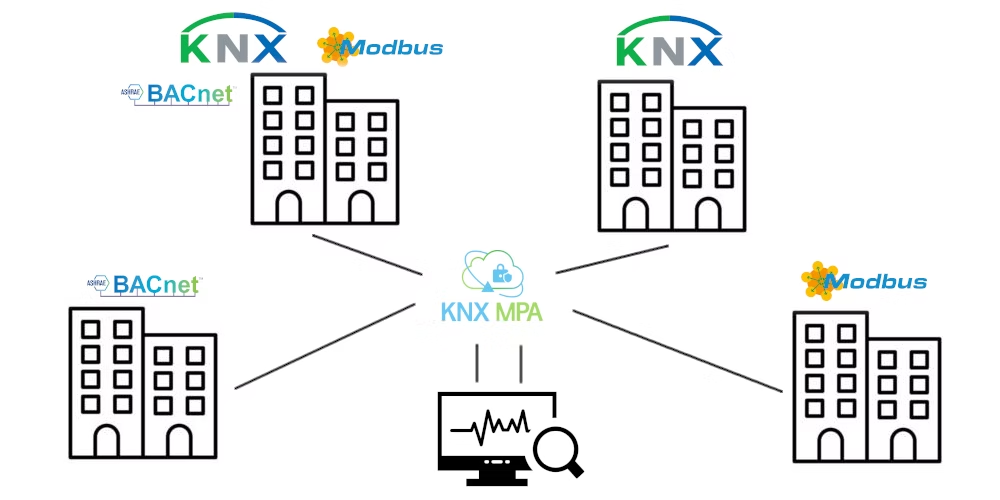
KNX MPA (Multi Protocol Architecture) is a registered network solution for visualization by KNX Ireland and is developed to overcome the obstacles of remote universal monitoring of different and multi-protocol systems.
KNX MPA represents a powerful tool for the integration and control of smart homes and buildings, combining the advantages of the KNX standard with the capabilities of other communication protocols. This enables the creation of more flexible, scalable, and compatible systems that can meet different automation requirements and scenarios.


KNX Multiprotocol Architecture (KNX MPA)
KNX MPA (Multi Protocol Architecture) is a concept or architecture that expands the capabilities of the traditional KNX standard by enabling integration and compatibility with a multitude of other communication protocols. This allows KNX systems to interact and operate together with other technologies used in building automation and smart homes.
Wired Solutions >
1. KNX TP (Twisted Pair):
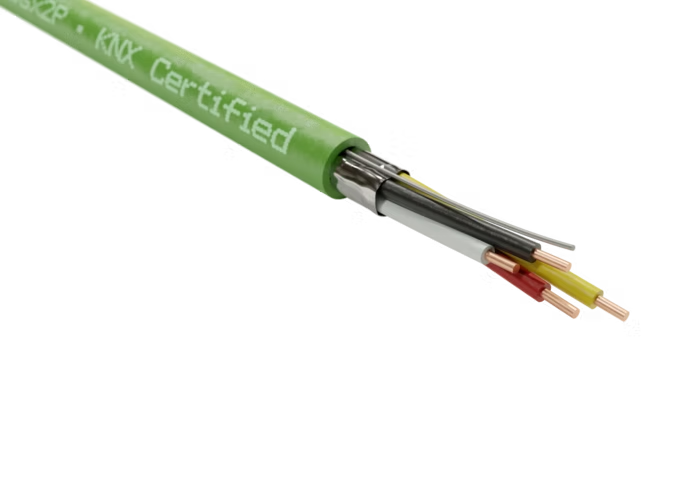
- Description: This is the most commonly used wired solution in KNX systems. It uses twisted pair cables (Twisted Pair) for data transmission and power between devices.
- Advantages: Reliability, stability, high data transmission speed, and the ability to control a large number of devices. Not affected by external factors like radio interference.
- Applications: Widely used in residential and commercial buildings for lighting, heating, ventilation, security, and more.
2. KNX PL (Powerline):
- Description: Uses existing electrical cables to transmit data. Devices connect to the power grid, eliminating the need for additional cabling.
- Advantages: Easy installation in existing buildings without needing to run new cables.
- Applications: Suitable for renovation projects or locations where new cabling is not feasible.
Wireless Solutions >
1. KNX RF (Radio Frequency):
- Description: A wireless solution that uses radio frequencies for communication between devices. Ideal for locations where cabling is difficult or undesirable.
- Advantages: Easy installation, especially in existing buildings where cabling is an issue. Flexibility in device placement.
- Applications: Used for lighting, blind control, heating, and other smart home applications requiring wireless control.
2. KNX IP (Internet Protocol):
- Description: This solution uses the existing IP network (Ethernet) for communication between devices. KNX IP routers and interfaces enable integration of KNX systems into local networks and the internet.
- Advantages: Allows remote access and control via the internet. Ensures high data transmission speeds and easy integration with other IP-based systems.
- Applications: Commonly used in modern smart buildings where integration with other systems or remote control is needed.
Hybrid Solutions:
Combination of wired and wireless solutions:
In many cases, KNX systems can combine wired and wireless technologies within the same installation. For example, the core components of the system can be connected via KNX TP, while hard-to-reach or mobile devices can use KNX RF.
Key Aspects of KNX Multi Protocol Architecture:
Integration of Different Protocols:
- KNX MPA allows the integration of KNX with various communication protocols such as Zigbee, Z-Wave, Wi-Fi, Bluetooth, Modbus, BACnet, and others. This enables broader compatibility and flexibility for building automation systems.
Key Aspects of KNX Multi Protocol Architecture:
Centralized Control:
- With KNX MPA, different protocols can be managed by a single central system or controller. This simplifies the management and monitoring of various devices that use different communication standards.
Key Aspects of KNX Multi Protocol Architecture:
Scalability and Adaptability:
- KNX MPA offers greater scalability for existing KNX systems. This architecture allows for the addition of new technologies and devices without the need for complete rewiring or replacement of existing components.
Key Aspects of KNX Multi Protocol Architecture:
Interoperability:
- With KNX MPA, devices and systems based on different protocols can communicate and interact with each other, leading to more efficient resource usage and better optimization of building automation.
Key Aspects of KNX Multi Protocol Architecture:
Applications:
- It is suitable for new projects as well as for upgrading existing installations where there is a need to integrate new technologies into existing KNX infrastructure.
- KNX MPA is especially useful in situations where integration of different systems is required, such as lighting, heating, ventilation, security, and energy management, which may use different protocols.