
You can count on us!
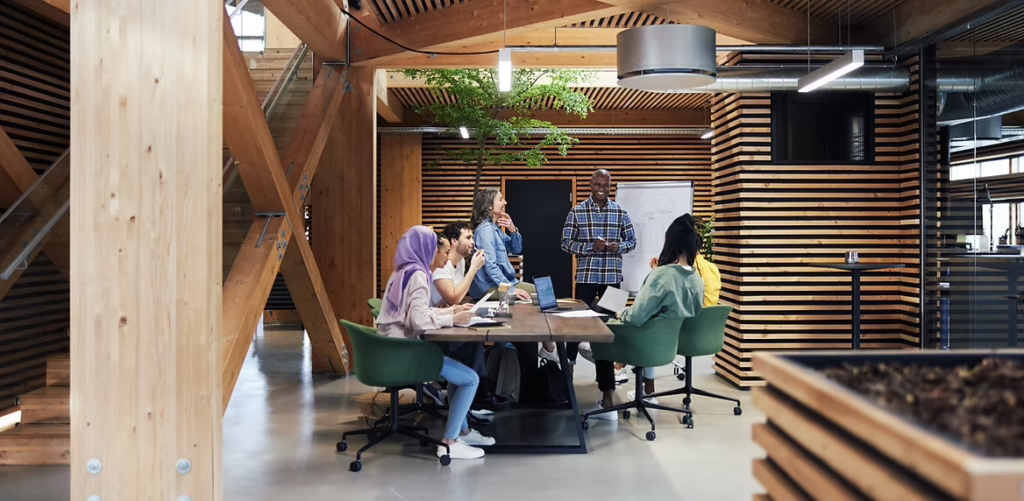
Integrating modern and cutting-edge technologies into a smart office can directly boost the productivity of individual employees and connected teams within your company. The modern office is the smart office!
Smart Office – Work Smarter, Not Harder!
A smart home is a residence equipped with cutting-edge technologies and next-generation systems that fully automate and integrate various aspects of the living environment. The goal is to improve comfort, security, energy efficiency, and overall quality of life.
Key Features of the Smart Office
- Intelligent Lighting Control
- Automatic lighting adjustment based on time of day and occupancy.
- Energy-saving LED lighting systems that can be controlled remotely.
- Climate Control and Heating
- Smart thermostats and sensors to regulate temperature and ventilation, ensuring optimal comfort.
- Automatic switching off or reducing heating and cooling in inactive zones.
- Access Control and Security
- Access control systems, including smart locks, biometric scanners, and RFID cards.
- Integrated alarm systems and video surveillance for enhanced security.
- Space Management
- Occupancy sensors and software for managing workspaces, helping to optimize office space usage.
- Automated systems for booking meeting rooms and workstations.
- Energy Efficiency
- Monitoring and analysis of energy consumption to identify saving opportunities.
- Renewable energy sources such as solar panels, integrated into office buildings.
- Connectivity and Communication
- High-speed internet and wireless networks for uninterrupted connectivity.
- Integration with cloud services and collaboration platforms such as Microsoft Teams, Slack, and others.
- Work Process Management
- Software systems for project and task management that help coordinate teams and optimize workflows.
- Automation of routine tasks using robots and AI.
- Healthy and Comfortable Work Environment
- Systems for monitoring air quality, humidity, and temperature to ensure a healthy work environment.
- Smart furniture, such as adjustable desks and ergonomic chairs, to improve employee comfort.
Examples of Technologies in the Smart Office
- Presence Sensors: Installed in rooms to automatically turn lighting and climate control on or off.
- Smart Locks: Allow access control via mobile apps and biometric data.
- Interactive Displays: Used for presentations, video conferencing, and collaboration.
- Internet of Things (IoT): Network-connected devices that exchange data and automate various office functions.
Benefits of the Smart Office
- Increased Productivity: Automating routine tasks and ensuring optimal working conditions helps employees work more efficiently.
- Reduced Costs: Optimizing energy usage and effective resource management leads to significant savings.
- Enhanced Security: Integrated security systems protect both employees and data.
- Flexibility and Comfort: Personalized settings for the work environment that meet individual employee needs.
- Health and Well-being: An improved work environment that supports employees’ health and overall well-being.
In Conclusion
The smart office represents a modern approach to the workplace, where technology and automation play a key role in enhancing efficiency, security, and comfort. By integrating various systems and devices, the smart office offers innovative solutions that boost productivity and ensure sustainable resource usage.