
You can count on us!
What is the connection between the KNX standard and the smart enterprise?
The KNX standard is an internationally recognized open standard for building management and automation. It is widely used in the automation of smart homes and buildings, including lighting, heating, ventilation, security, and other systems. In the context of a smart enterprise, KNX-based technological solutions can play an important role in the automation and management of various aspects of buildings that are part of the enterprise.
What is a smart enterprise?
A smart enterprise is an industrial organization that implements and uses cutting-edge technologies and intelligent systems to automate and optimize its business processes. This includes the integration of information and communication technologies based on the KNX standard, the Internet of Things (IoT), artificial intelligence (AI), robotics and integration, data analysis, and other modern technologies to achieve high efficiency, adaptability, and sustainability.
Key Features of the KNX Standard:
- Interoperability: KNX allows different devices and systems from various manufacturers to communicate and work together on a single network.
- Scalability: KNX can be used for both small and large installations, from individual rooms to entire buildings and complexes.
- Flexibility and Adaptability: Systems based on KNX can be easily expanded and adapted to the changing needs of the building and its occupants.
- Centralized and Decentralized Control: KNX systems can be managed both centrally and decentrally, providing flexible control options.
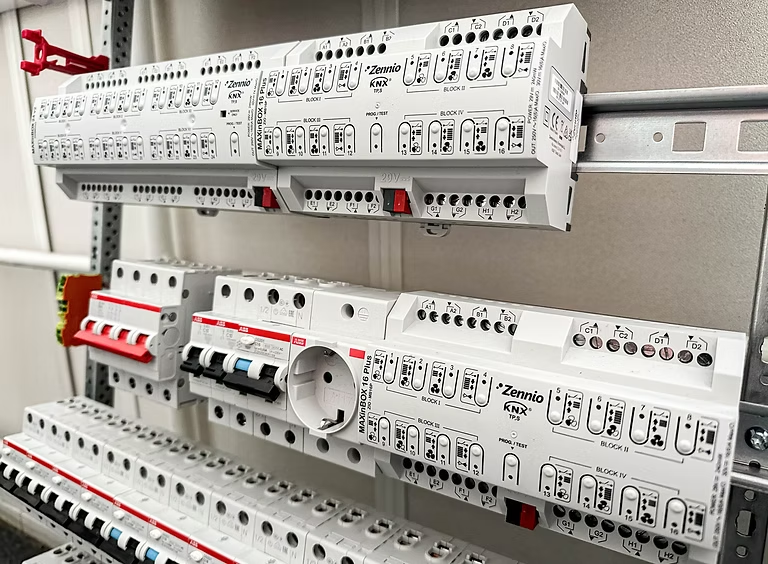
Implementing an Architecture for Distribution and Load Balancing of Work Processes in the Smart Enterprise:
- Building Automation:
- KNX can be used to control lighting, heating, ventilation, and air conditioning in offices, production areas, and storage facilities within the enterprise.
- Integration of KNX systems with other industrial standards and control systems (SCADA, BMS, etc.) for centralized building management.
- Energy Efficiency:
- The KNX standard allows monitoring and control of energy consumption, helping to optimize energy costs and improve the energy efficiency of the enterprise.
- Automatic regulation of lighting and air conditioning based on human presence and external conditions, reducing unnecessary energy consumption.
- Security and Access:
- Integration of security systems such as video surveillance, access control, and alarm systems into a centralized network managed by KNX.
- Possibility for remote monitoring and control of the enterprise’s security.
- Comfort and Convenience:
- Automation of various systems in the enterprise buildings to create a comfortable and convenient work environment for employees.
- Control of lighting, blinds, audio and video systems through centralized panels or mobile applications.
- Integration and Compatibility:
- KNX can be integrated with other systems and platforms used in smart enterprises, such as IoT devices, industrial robots, and systems for production management.
- Ability to use the KNX standard in combination with other technologies and protocols to achieve full integrated enterprise management.
The core of every smart enterprise is the operation of a smart workplace
(Smart Enterprise is the Smart Workplace)
This means achieving a work environment where employees are empowered to use any device or work mode, allowing them to complete their tasks in the most accessible way and, when necessary, have direct access to secure and reliable information—while being fully engaged in the business process.
Smart Enterprises, Ready for the Future
The increased dynamics of the business environment require companies to offer high productivity, and their employees to be able to act quickly and function efficiently. This implies the integration of adaptive solutions that free workers from conventional limitations and allow them to reach a new level of responsiveness.
This means:
- Empowering an effective workforce.
- Providing smart devices and applications for reliable access at any time and place to people, data, and rich-function applications.
- Scaling up team collaboration.
- Supporting collaboration tools that seamlessly drive connectivity and productivity without delays in responsiveness or team performance.
- Achieving continuous availability.
- Implementing an architecture for distributed and balanced services to avoid overload, by optimizing reliability and accessibility.
With a smart enterprise, you stay focused on the customer.
What is the difference between a smart enterprise and a smart factory?
Smart enterprise and smart factory are concepts that overlap to some extent but have different focuses and scopes. The main difference between them lies in the underlying technology — for example, the Industry 4.0 standard and the OPC UA standard, which offers an information model that aims to provide unified means for communication across the system architecture for factory automation.
When comparing a smart enterprise and a smart factory, we identify key differences in:
1. Scope:
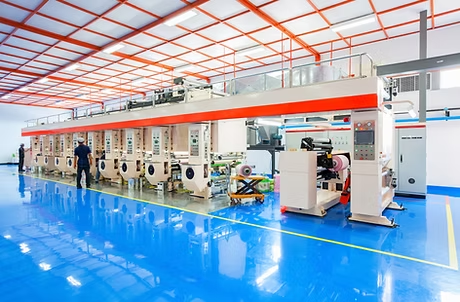
- The smart factory is more focused on the production process. It emphasizes digitization and automation of production lines, machinery, and equipment inside the factory.
2. Goals:
- The main goal of the smart factory is optimization of production operations, increasing productivity and quality, reducing waste, and minimizing downtime. This includes predictive and preventative maintenance, resource optimization, and downtime reduction.
3. Technologies:
- Uses technologies such as IIoT (Industrial Internet of Things), cloud computing, big data analytics, robotics, 3D printing, cyber-physical systems (CPS), and others. These technologies allow continuous monitoring and optimization of production processes.
- Industry 4.0 is associated with breaking the rigid hierarchy of automation and is broadly discussed, but still rarely applied. atvise takes a different approach. For easier transition to digitization and automation, atvise SCADA focuses on flexibility and freedom.
- atvise® architectures can be freely designed and defined. This ensures that the best possible solution can be found to meet the high demands posed by modern automation systems.
4. Examples:
- With a focus on platform independence, security, and scalability, OPC UA is chosen as a communication standard between machines, systems, and the industrial Internet of Things in the context of Industry 4.0.
- Integration of all participants in the process is based on OPC UA from the ground up. For example, atvise® builder and atvise® client use OPC UA methods for direct connection to databases and visualization. The result is a modern open platform, ensuring full interoperability and integration between systems and data processing.
- Through direct SCADA integration, operational compatibility and network communication are enhanced.
- Access to all data in real time, regardless of the system or device manufacturer, in different networks or processes.
- Smooth adaptation of existing systems in terms of architecture and automation without vendor lock-in, thanks to OPC UA.
- Access to historical data and alarms between different servers via atvise® even before realization… and much more.
In conclusion:
The smart enterprise has a broader scope and includes the entire digitalization and optimization of all business processes and resources. It ensures comprehensive integration, visibility, and efficiency of all business operations — from production and logistics to management and customer interaction. The two concepts strive for improved performance and competitiveness, but from different angles and with different technologies.