
From data array* to action: How does KNX IoT connect artificial intelligence to real smart homes and buildings?
* Using big data, the system analyzes user behavior in real time and adapts its functions automatically.
In recent years, we have witnessed a true revolution driven by artificial intelligence (AI). From healthcare to transportation, from finance to industrial production – intelligent algorithms are changing the way we make decisions, automate processes and create value. But one key challenge remains: How do we connect this digital intelligence to the real, physical world and our everyday lives?
This is where KNX IoT comes into play – the infrastructure that makes the connection between AI and “smart” reality possible.
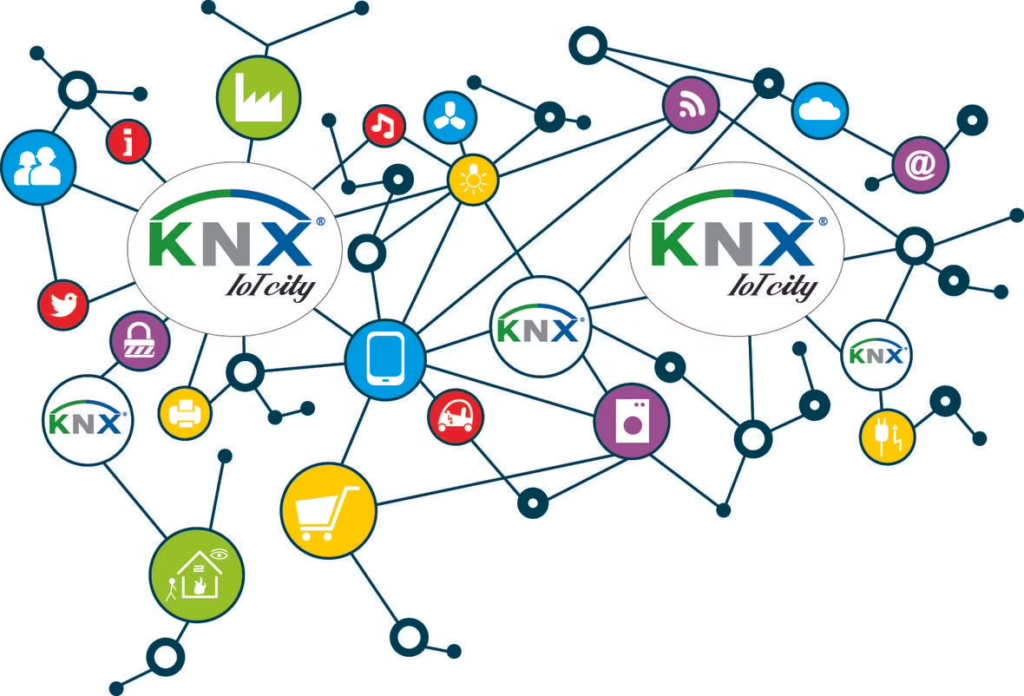
From Data to Action: The Infrastructure That Bridges AI with Real Smart Homes and Buildings
KNX – the backbone of intelligent automation
KNX is an open standard for building automation, used in over 190 countries and supported by thousands of manufacturers. It allows different devices and systems – lighting, heating, ventilation, security, energy management, etc. – to communicate with each other seamlessly.
But what makes KNX IoT even more significant today is its ability to integrate with cloud services, AI platforms and big data analytics to make smarter decisions – in real time.
AI in a real environment – only with the right infrastructure
Artificial intelligence needs three key elements to work effectively in the real world:
- Reliable data from the physical world – temperatures, presence, energy consumption, CO₂ levels and more.
- Intelligent analysis and modeling – through AI algorithms trained to predict, optimize, and make decisions.
- Automatic execution of actions – triggering devices, systems and scenarios in real time.
KNX IoT fulfills all three requirements: sensors collect accurate data, the system transmits information to AI models in the cloud, and then KNX actuators execute commands in the building – all in a secure and standardized way.

Practical examples
Predictive maintenance: By analyzing sensor data, the system predicts equipment damage or wear, automatically notifying the maintenance team.
Energy efficiency: AI analyzes energy consumption in an office building and automatically adjusts heating and lighting using the KNX infrastructure.
Comfort and health: In a “smart home”, an AI algorithm monitors the preferences of the occupants and automatically adjusts the microclimate, humidity, and light to ensure optimal comfort and productivity.
In conclusion
The time for KNX is now
While artificial intelligence continues to develop at a rapid pace, the key to its real-world application lies not in ever-smarter algorithms, but in the infrastructure to connect them to the world around us .
KNX IoT is this infrastructure.
Investing in KNX today means building flexible, sustainable and intelligent buildings tomorrow. Homes and offices that don’t just react to our needs, but anticipate them.
Are you ready to connect your home or project to the future?
Leave a Reply