
Integration of drones and anti-drone technologies in X City with a civil and military airport
In the high-tech X City – a city of the future where drones play an important role in urban logistics, security and communications, the challenges increase when the city has a civilian airport or a combination of civilian and military airports .
How can drone air traffic be compatible with strict aviation regulations without compromising security?
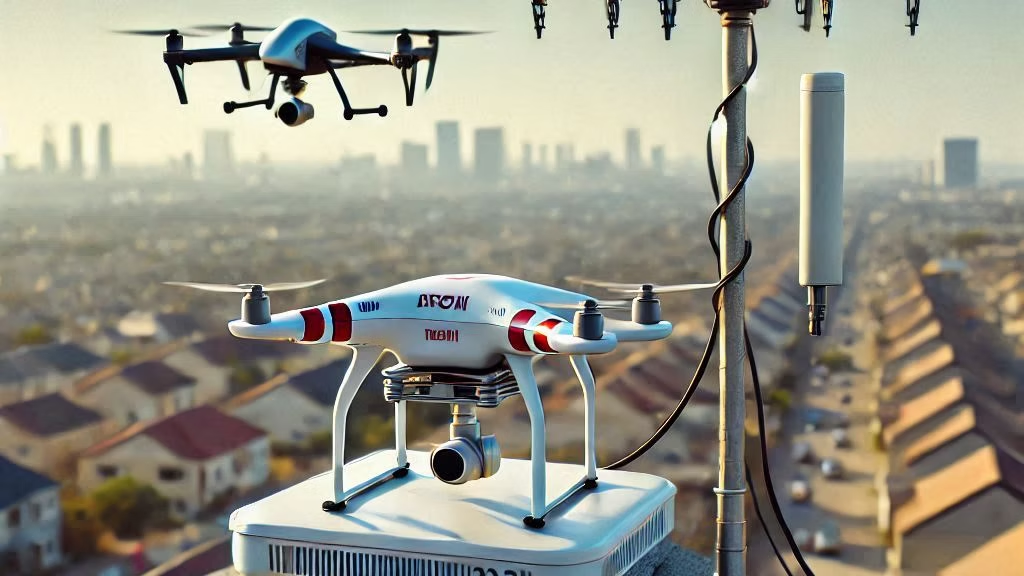
The integration of drones for future smart cities
1. Airspace management around airports
1.1. Definition of airspace areas
X City uses a modern drone management system (UAV Traffic Management – UTM) , which dynamically controls the areas around airports:
- Controlled Traffic Region (CTR) – A radius of 5-10 km around the airport in which all drone operations require approval from air traffic control (ATC).
- Restricted Airspace (RA) – A completely restricted area around runways where flying is permitted only for specialized drones (emergency, inspection, security).
- Dedicated UAV Corridors – Designated air corridors for drones that allow conflict-free operation adjacent to aviation traffic.
1.2. Integration between UTM and air traffic control
- All drones entering the controlled area are required to send a flight plan to ATC.
- In case of emergencies or VIP flights, UTM automatically redirects the drones .
- Only authorized drones with a digital identifier can operate in certain areas.
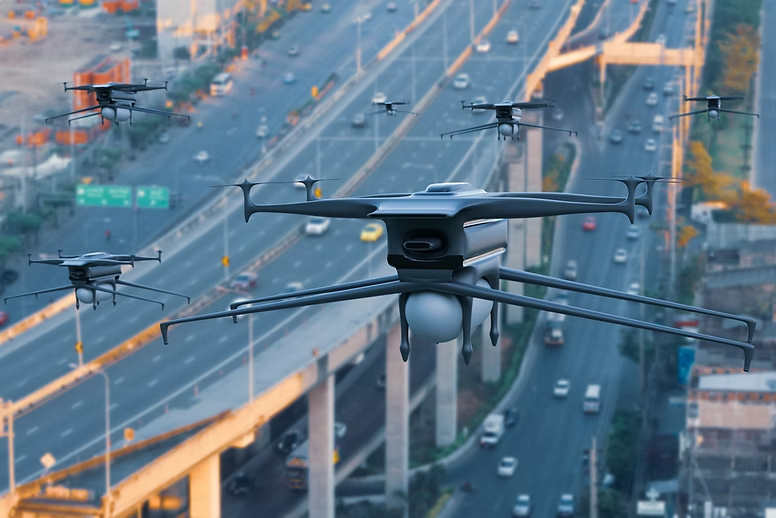
UAV Traffic Management – UTM
1.2. Integration between UTM and air traffic control
- All drones entering the controlled area are required to send a flight plan to ATC.
- In case of emergencies or VIP flights, UTM automatically redirects the drones .
- Only authorized drones with a digital identifier can operate in certain areas.
2. Anti-drone measures to protect airports
2.1. Intelligent anti-drone technologies
Airports in X City have multi-stage anti-drone systems that operate selectively :
- AI analysis and identification – Machine learning recognizes threats based on the drone’s flight pattern.
- Radio Frequency Jamming (RF Jamming) – Blocks communication from unauthorized drones.
- GPS Spoofing – Replaces drone signals to divert them.
- Interceptor drones – Special autonomous drones for capturing hostile devices.
2.2. Dynamic Threat Management
When an unauthorized drone enters a controlled area, the system goes through reaction stages :
- Detection and Identification – Checking Remote ID, flight characteristics and communication protocol.
- Warning and redirection – Automatic guidance to a safe area.
- Electronic jamming or interception – If the drone does not respond, anti-drone measures are activated.
- Physical neutralization – If a threat is proven, interceptor drones or EMP (electromagnetic pulse) are used.
3. Dynamic air corridors for drones
To prevent conflicts with air traffic, X City is implementing flexible drone air corridors that:
They use AI algorithms to predict traffic jams and dynamically reroute.
They automatically adapt to changes in the flight schedule.
They allow emergency maneuvers for high-priority drones (emergency, security).
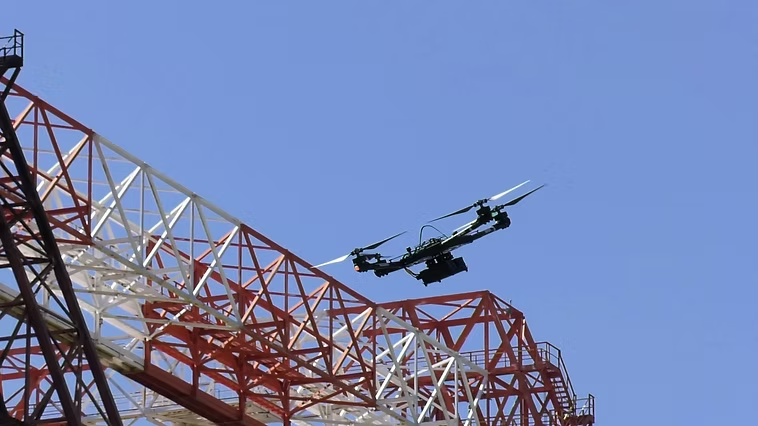
Dynamic air corridors for drones
4. Military airports and additional security measures
In the presence of a military airport , anti-drone measures are even stricter:
- Absolute no-fly zone – All non-essential drones are automatically blocked .
- Military interception systems – Use kinetic or electronic methods to eliminate threats.
- Separate UTM control – Military and civilian drones operate under different protocols , but share critical information.
5. Drone applications in airport areas
Not all drones are a threat – X City relies on them for operational activities :
- Inspection of runways and aircraft engines – Drones with cameras and thermal imaging.
- Logistics and deliveries – Domestic airport cargo deliveries.
- Security and monitoring – Drones for video surveillance and security.
In conclusion
In X City, where civil and military airspace overlap, drones and anti-drone systems work harmoniously through intelligent control and dynamic protocols . Synchronization between UTM, ATC and military systems allows drones to operate safely while critical areas remain protected.
This integration model is an example of future smart cities that will rely on automation, AI, and security to balance the efficiency and safety of air traffic.
Leave a Reply