
Social Capital: The Power of Mutual Trust for Economic Success
In the modern economy, success is not measured solely by financial indicators – it also depends on the invisible but extremely powerful resources that create the conditions for growth and sustainability. Social capital is the network of social connections, norms and trust that allows individuals and organizations to collaborate effectively, innovate and achieve economic goals.

Culture of collaboration
In a world where competition is intensifying and market conditions are changing rapidly, social capital is becoming a strategic asset. It not only facilitates business operations, but also strengthens the resilience of economic agents in times of crisis. Building a strong foundation of trust, shared values and effective networks can be a decisive factor for long-term success.
Key elements of social capital
1. Networks and connections
- Formal networks: These connections are created through formal institutions such as business associations, professional organizations, and chambers of commerce. They provide a platform for the exchange of ideas and facilitate collaborative work.
- Informal networks: Personal and social connections built on trust, friendship, or kinship are no less important. They often provide quick access to resources and support in critical moments.
2. Social norms
- Common values: Shared beliefs and ethical standards guide the behavior of individuals and organizations, creating a solid foundation for mutual respect.
- Rules and standards: Established rules facilitate interaction by reducing the risk of misunderstandings and conflicts.
3. Trust
Institutional trust: Trust in institutions ensures predictability and stability in economic processes, creating a favorable environment for long-term investments.
Interpersonal trust: When people trust each other, they tend to work collaboratively without the need for heavy control mechanisms.
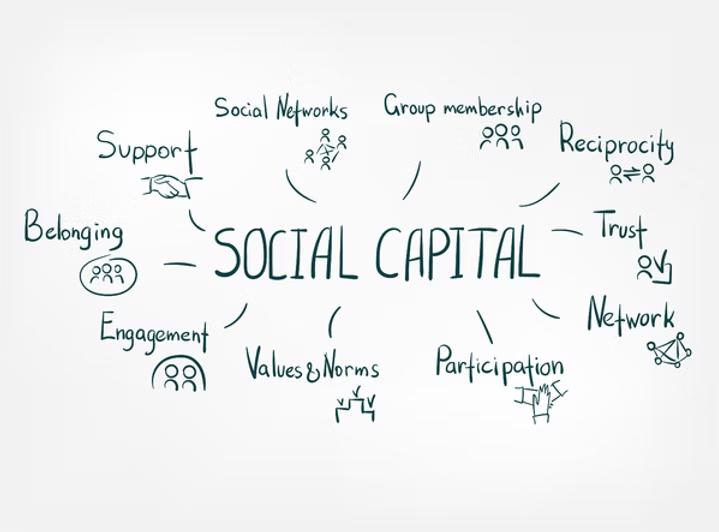
What is social capital?
Benefits of social capital
Reducing transaction costs.
Strong social ties and high levels of trust lead to:
Faster conflict resolution: Strong networks facilitate dialogue and compromise, helping to resolve disputes at an early stage.
Lower negotiation and monitoring costs: When parties trust each other, the need for expensive legal and control mechanisms is reduced.
Improving productivity and innovation
- Sharing knowledge and resources: Effective networks facilitate the exchange of expertise and information, which stimulates innovation.
- Joint projects and initiatives: Cooperation between different actors leads to the emergence of innovative solutions and the creation of synergy between different sectors.
Increasing sustainability and competitiveness
- Collective support: In times of economic crisis, social capital provides the necessary support and mutual assistance, ensuring stability.
- Access to new markets: Expanded networks and connections make it easier to enter new market opportunities and discover new business resources.
Social cohesion and stability
- Increased social cohesion: Strong social ties promote harmony in society and contribute to reducing social inequalities.
- Improved social stability: When society relies on mutual trust and cooperation, it becomes more resilient and predictable.
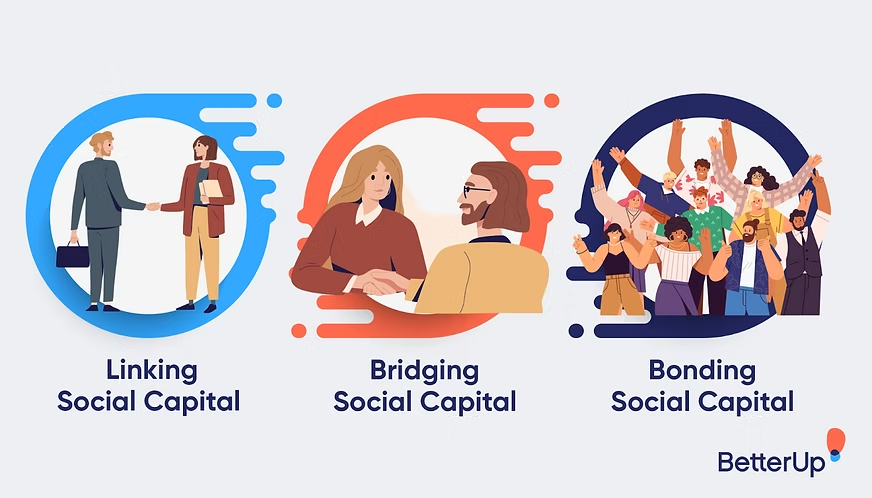
Types of social capital
Bonding social capital
Function: Provides emotional support and basic resources necessary for personal and professional development.
Characteristics: Close ties between people with similar characteristics or interests – families, friends, closed communities.
Bridging social capital
- Characteristics: Broad ties that unite different social groups and communities.
- Function: Promotes the exchange of information, ideas and resources between different sectors, creating opportunities for innovation and collaboration.
Linking social capital
Function: Facilitates access to institutional support and resources, opening doors to strategic partnerships and new opportunities.
Characteristic: Vertical relationships between individuals and institutions, especially those with power and influence.
In conclusion
Social capital is not just a theoretical concept – it is a real driver of economic success and sustainable development. By building a strong network of trust, shared values and effective connections , organizations and individuals can reduce transaction costs, stimulate innovation and improve their overall competitiveness. In a constantly changing market, investment in social capital is proving to be a key tool for achieving stability, growth and long-term success.
In today’s world, where mutual trust and cooperation are essential, developing social capital is one of the most important strategies for any organization that strives to achieve sustainable success and competitive advantage.
Leave a Reply